
Jessie Sampter’s Theo-biocentric Shabbat
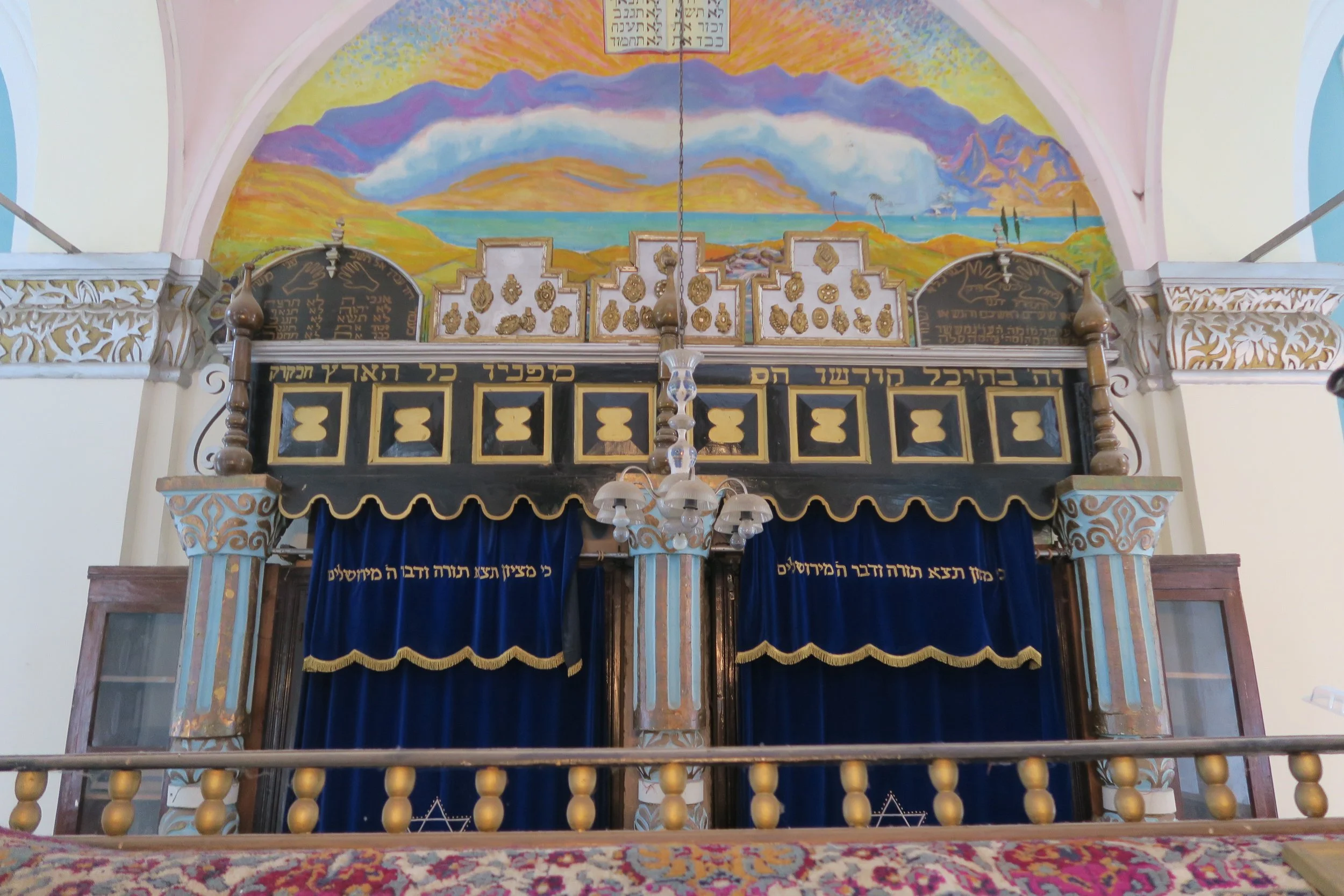
The "kabbalistic" synagogue of Oni, Georgia (1895), that I had the privilege of visiting earlier this month. Photograph: Jonathan Schorsch.
For the past year or so I have been researching and writing about three American Jewish women, Josephine Lazarus (1846-1910), Mary Antin (ca. 1881-1949), and Jessie Ethel Sampter (1883-1938). The three friends met in New York City, where they all lived, just before the end of the 19th century. Lazarus, a generation older than Sampter and Antin, took the two younger women under her wing, mentoring them.
Much of their intertwined writings and lives can be read through the lens of neo-Romantic naturalism and American progressivism, as examples of what Julian Levinson calls Jewish Transcendentalism. The three activists, writers, and thinkers stand as riveting examples of the complex relationship between Jews, Judaism and the other-than-human world (“nature”) in the long era of the granting of Jewish Emancipation. Very much children of their time, Josephine, Mary, and Jessie found in the natural world sacredness, refuge, inspiration, and meaning. For Lazarus and Antin nature seems to have served as a replacement for Judaism, while for Sampter it appears more as an expansion of her Judaism. The scientific understanding of nature informed Lazarus and Antin strongly, though for all three thinkers science alone was as unhealthily myopic as religion alone. Intellectual biographies of each women reveal self-conscious, self-liberation from what they saw as dualistic and disembodied traditional Judaism.
Sampter grew up in New York City, in a very assimilated family, becoming a poet, an intellectual, a writer, teacher, and activist, despite a bout of polio as a twelve-year-old that left her quite disabled. Exploring religiously, Jessie converted to Unitarianism. Discovering Zionism in her late teens and early 20s, she worked at Hadassah in New York, leading their education department. In 1919 she made immmigrated to Palestine, living the rest of her life there, active in education, writing, primarily for English-language publications in the United States and Palestine – she was quite widely read during her career -- and a life of engagement that stands as a prime example of the “vita activa” that Hannah Arendt lauded.
Nature was Torah for Sampter. One of her poems for Jewish children bought this idea alive.
My prayer book open on my knee,
Another prayer is taught to me,
A Torah without words.
I hear it sung by swinging leaves,
by every breeze that sighs and heaves,
By all the choirs of birds.
According to scholar Sarah Imhoff, Sampter “characterized her own learning as a theological education at the hands of nature, and she hoped the same for other children.”
Sampter included in her 1919 collection of poems, Coming of Peace, an updated version of the Ten Commandments, which she calls The Ten Words. To the fourth commandment, to observe the weekly Sabbath, along with family, servants, and domestic animals, she added two sentences: “For the Lord made heaven and earth, the sea and all that is in them, and blessed them, that they might rejoice in life. Wherefore the Lord created one day of rest that all men might rejoice thereon equally in freedom and life.” Sampter’s two simple sentences perform remarkable work. Her first sentence posits a divine blessing to all of creation to rejoice in life. All beings are bestowed with the divine gift of life itself, with a right to enjoy life unimpeded, unmolested. All existing life enjoys a divine right to “rejoice in life,” that is, to a kind of personhood. This divine right to personhood is what grounds shabbat, which then becomes a weekly celebration (instantiation) of the human right/duty to rejoice in life (to rest once weekly), since it is as a creature of the divine that we, too, enjoy the gift of life. With her two sentences Sampter gently but firmly nudged shabbat toward theo-biocentrism.